Lessons Basket
StoriesMathMapClassroomPricing
StoriesMathMapMy classroomPricing
Lessons Basket

Classroom-ready lessons with printable handouts·Contact

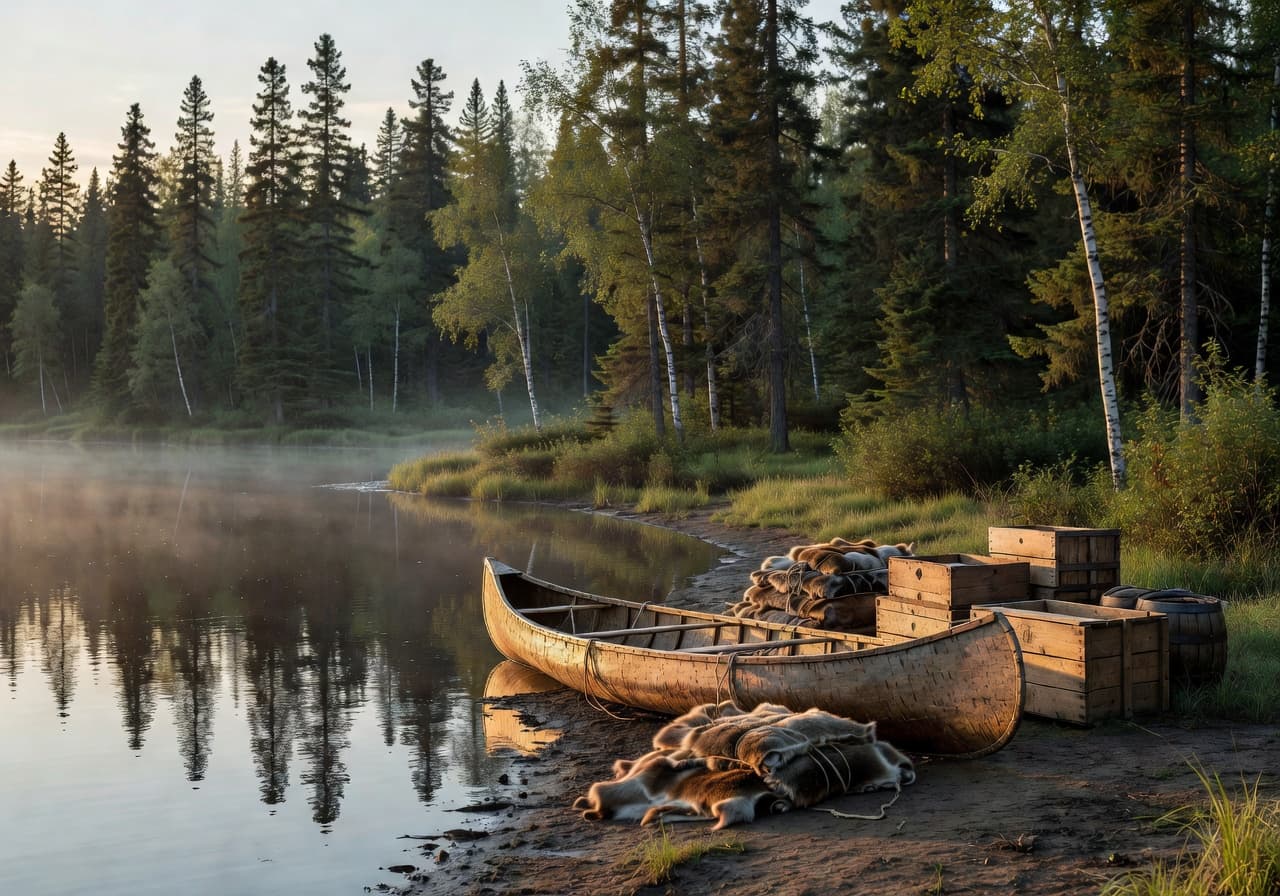
Load the Canoes

Warm-up: count the post
Load the canoes
Pieces and portages
Reading
Exit ticket
Speaking
Writing
Grade
K123456789101112
OUTCOMES:
Answer key
Print Reading PDFPrint all PDFs

Reading — The pemmican post

Read both passages. Then answer the questions.

Passage A — A post on the Qu'Appelle

The Qu'Appelle Valley is home to Cree, Saulteaux, Nakoda, and Dakota peoples. Over 200 years ago, the North West Company built a trading post on the Qu'Appelle River, near where Rocanville, Saskatchewan, is today. It is now called Fort Espérance. Cree and Nakoda hunters, and later Métis hunters, brought bison meat and hides to trade. In 1812, a young Métis man named Cuthbert Grant came to work at the post as a clerk. He was about 19 years old.

Passage B — Food for the brigades

The post was famous for pemmican. Women did the skilled work of drying the meat, pounding it, and mixing it with melted fat. Sometimes they added saskatoon berries. The pemmican was packed into hide bags that weighed about 90 pounds each. Canoe brigades carried the bags far away to feed the people who paddled the long fur-trade routes. Each paddler carried two pieces at every portage.

Vocabulary
  • pemmican
  • brigade
  • portage
  • clerk
  • piece
Continue to Exit ticket

More lessons sharing Métis · Cree

Poundmaker: Leadership in a hungry spring

Follow one Cree head chief’s choices during the North-West Resistance of 1885—from hunger and fear at Fort Battleford to Cut Knife Hill and a treason trial—using narrative, listening, and document-style reading.

Nations & peoplesCree · Métis

Gabriel Dumont: Métis Leader on the Prairies

What: You’ll watch a short video about Gabriel Dumont’s life and leadership, ask him questions in a class chat, then work together to line up the big moments of his story in the right order.

When: The 1800s on the Prairies—the places and communities where Gabriel lived and led.

How: Your teacher will pause for questions as you go; you’ll share ideas as a whole class in the chat, then use the drag-and-drop timeline to decide together which event fits each spot on the line.

Why: Métis leadership and community life on the Prairies are part of Saskatchewan’s story—and putting events in order helps you see how the narrative fits together.

Nations & peoplesMétis
In progress

Subscribe to unlock

Fur trade and early Métis kinship networks

Investigate how labour, family ties, language, and trade routes shaped early Métis communities in the fur trade era.

Nations & peoplesMétis · Cree