Reading — Counting value
Read both passages. Then answer the questions.
Passage A — Measuring in pelts
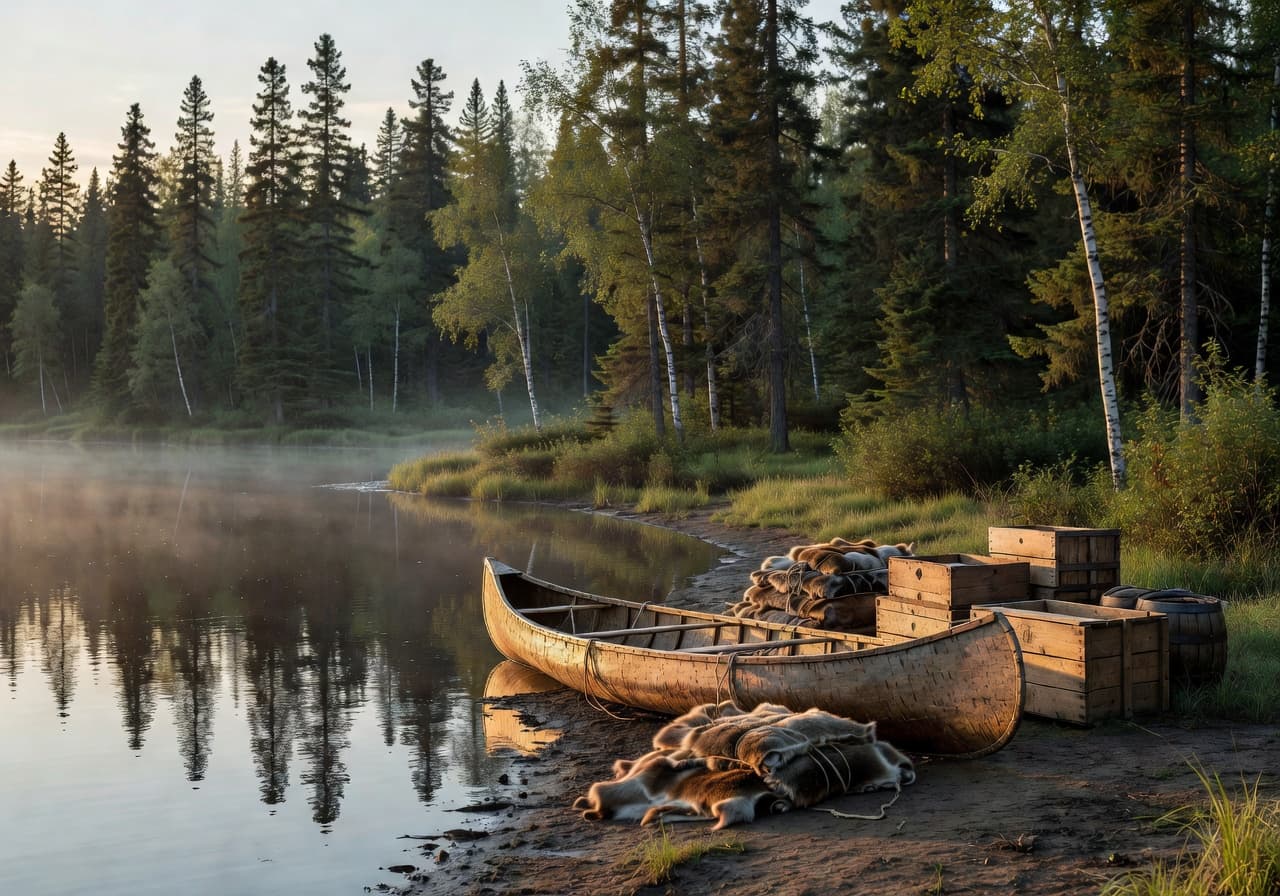
At fur-trade posts there was no paper money. Value was counted in beaver pelts. The Hudson's Bay Company called this unit the 'Made Beaver,' and the North West Company had a similar unit. In the late 1700s, one pelt was often worth one blanket, two hatchets, or eight knives, but prices changed from post to post and year to year. First Nations traders compared prices at rival posts — a Hudson's Bay Company post stood very close to the North West Company post on the Qu'Appelle — and expected good measure in every trade.
Passage B — Organizing a great hunt
Cuthbert Grant began as a clerk at the Qu'Appelle post in 1812. Later he led a Métis settlement at White Horse Plain, near Red River, and was named Warden of the Plains in 1828. He was chosen as a captain of the great Métis buffalo hunts. These hunts were huge: one in 1840 included about 1,630 people. Leaders and rules were chosen without writing anything down. Organizing so many people, carts, and horses took careful counting and planning.
- unit of value
- rate
- ratio
- pelt
- Warden of the Plains